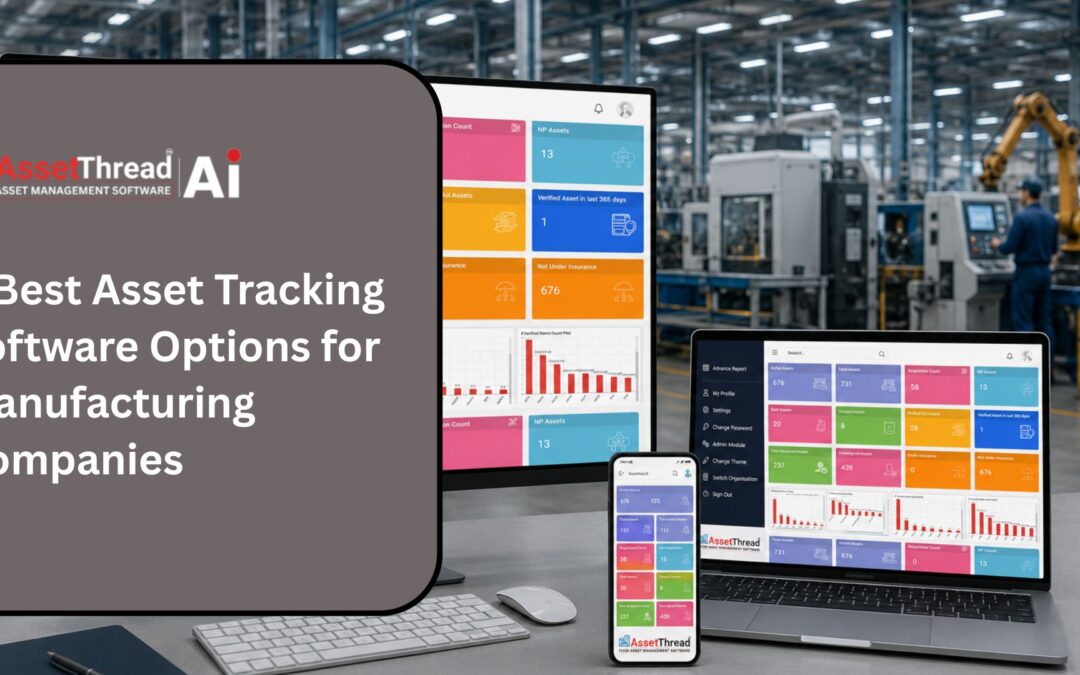
Companies that manufacture depend on proper management of their assets that they can have smooth production and minimize the delays in the operations. Right asset management solution assists businesses to track machinery, equipment, and tools and enhance maintenance planning and operational visibility. Selecting trustworthy asset tracking software may assist manufacturers with less downtime, enhanced production, and more effective control of key business assets.
The contemporary manufacturing landscapes are characterized by numerous production lines, warehouses, and types of equipment. The lack of a proper tracking system can lead to problems like misplaced tools, maintenance problems, and inaccurate records. A well-structured system assists businesses to structure operations in addition to supporting growth of businesses over the long term.
Why Asset Tracking Software Is Important for Manufacturing
Manufacturing plants can easily deal with hundreds or thousands of assets in various departments. Manual tracking systems may cause loss of equipment, delay in maintenance and inaccurate documentation.
The solution of an advanced asset tracking software can assist manufacturers:
- Where and how track equipment is used.
- Reduce production downtime
- Improve maintenance scheduling
- Increase operational visibility
- Minimise manual errors
- Support compliance requirements
These systems enable the companies to deal with assets in a better way as well as enhancing efficiency in production.
Key Feature Comparison for Production Environments
Manufacturing companies require specialised features that support heavy operational demands. Not all platforms are designed for industrial production environments, so understanding the core capabilities is essential.
Real-Time Asset Visibility
Real-time tracking provides manufacturers with real-time visibility on the location, condition and availability of equipment. This assists production teams in rapid recognition of missing assets and minimize the delays.
Advantages of real time monitoring are:
- Faster equipment tracking
- Better production planning
- Improved workforce productivity
- Reduced asset loss
Live-time visibility is particularly handy in big plants where equipment is frequently unloaded and reloaded across the different departments.
Preventive Maintenance Features
Preventive maintenance tools aid manufacturers in scheduling maintenance and the inspection of equipment prior to the production being impacted by equipment problems. Planning of regular maintenance has the potential of lowering the cost of repairs, and increasing equipment life.
The advantages of preventive maintenance are:
- Lower unexpected downtime
- Improved equipment performance
- Better workplace safety
- Reduced repair expenses
A significant number of manufacturers combine maintenance workflow and software fixed asset management to ensure the proper maintenance records of equipment.
RFID Tracking and Barcode.
RFID tracking and barcode tracking technologies enhance accuracy and minimize manual efforts.
Barcode Systems
Barcode tracking is cheap and simple to put into practise. Employees can quickly scan equipment and update records using handheld devices.
RFID Systems
RFID tracking is more automated and faster to scan. It is applicable in large manufacturing industries where a number of assets are often transferred between departments.
Reporting and Analytics
Detailed reporting tools assist businesses to examine history of maintenance, equipment performance and efficiency of the operation. Powerful analytics are also utilized to plan the repairs, replacements, and budget decisions better.
When used in conjunction with the depreciation software used to manage the financial records of a business, accurate reporting may be deemed even more useful.
Scalability and Integration Capabilities.
Companies engaged in manufacturing are likely to increase operations with time, meaning scalability is a major consideration when selecting a system. The businesses should have the solutions capable of sustaining growth in the number of assets and the complexity of operations without significant changes to the systems.
Why Scalability Matters
- A scalable platform assists manufacturers:
- Establish new manufacturing plants.
- Support additional users
- Control increased inventories of assets.
- Enhance interdepartmental reporting.
The decision to use scalable asset tracking software enables businesses to find efficiency as the business expands.
Integration With Existing Systems
Integration capabilities help manufacturers improve accuracy and reduce duplicate data entry. Asset management systems should work smoothly with:
- ERP systems
- Inventory platforms
- Accounting software
- Procurement tools
- Maintenance systems
Integrated platforms improve communication between departments while creating more accurate operational reports.
Cloud-Based Accessibility
The cloud-based systems offer flexibility to the manufacturing teams operating in more than one location. Records, maintenance schedules, and reports can be accessed by employees via mobile devices or at remote workstations.
The advantages of cloud-based solutions are:
- Easier software updates
- Lower infrastructure costs
- Remote accessibility
- Faster implementation
These features help businesses improve operational visibility without increasing administrative workload.
Pricing Models and ROI Considerations
Cost: manufacturing businesses pay close attention to cost but firms must consider the long-term value as opposed to considering only the upfront price.
Common Pricing Structures
The most common systems are based on subscription-based pricing models, per-user, and enterprise pricing models. The popularity of subscription pricing is that it provides predictable monthly expenses and continual software upkeep.
Enterprise plans can be beneficial in larger manufacturers, which can have multiple locations and more advanced customisation features.
Knowing Return on Investment.
Manufacturers can attain high returns when they enhance efficiency and minimise losses associated with equipment.
Common ROI benefits include:
- Reduced downtime
- Lower maintenance costs
- Improved asset utilisation
- Better inventory visibility
- Reduced manual errors
Many businesses also use software fixed asset solutions to improve financial reporting and equipment management processes.
Conclusion
A manufacturing business can reap the following benefits of choosing the right asset tracking software: better control over equipment and production assets, improved efficiency, and reduced downtime. Organised asset management systems can enhance productivity and minimise manual mistakes and maintenance expenses for businesses.
With the continued expansion of manufacturing operations, having a scalable and integrated solution becomes vital to ensure smooth workflows and to have an informed business.
Frequently Asked Questions
Q1. What is asset tracking software for manufacturing companies ?
A. Asset tracking software helps manufacturers monitor equipment, tools, machinery, and inventory across production facilities. It improves visibility, maintenance management, and operational efficiency.
Q2. Why is software fixed asset management important ?
A. Software fixed asset management helps businesses track asset ownership, usage, maintenance history, and financial value. It improves compliance and supports better financial reporting.
Q3.What features should manufacturers prioritise in asset tracking software ?
A. Manufacturers should prioritise real-time tracking, maintenance scheduling, reporting tools, integration capabilities, mobile access, and scalability.