Asset tracking software is a clever investment as it allows businesses to track assets in real time, minimize operational losses and enhance efficiency. With the help of structured solutions, organizations have greater control over their resources and make wise decisions.
This visibility, automation, and data-driven insights make it a worthy long-term investment choice and not merely an operational tool.
What is Asset Tracking Software ?
Asset tracking software is a technologically based system that assists companies in the tracking of the whereabouts, utilization, and state of their tangible resources. It is used to substitute the manual tracking systems by a centralized digital system, which is more accurate and efficient.
Having all the asset information in a single location enables business to control operations and prevent the usual problems such as misplacement and underutilization.
Key capabilities:
- On-the-fly monitoring of the location and status of assets.
- Tracking of asset utilization and status.
- Automated maintenance scheduling
- Unified reporting and analytics.
Why Do Businesses Need Asset Tracking Software ?
Businesses are usually faced with difficulties in managing assets because of the inability to see them and ineffective procedures. In the absence of an appropriate system, assets may be lost, poorly maintained or under-utilized which increases costs and productivity.
Asset management software helps businesses to simplify operations and prevent mistakes in records by ensuring that all business records are accurate.
Problems which it is finding solutions to:
- Inability to find the assets fast.
- Errors from manual tracking methods
- Absence of real time operational information.
- Missed maintenance leading to downtime
What Makes Asset Tracking Software a Smart Investment ?
The asset tracking software provides high business value through enhanced efficiency, mitigating risks, and providing enhanced decision-making. It is not a mere tool but strategic investment.
1. Improved Asset Visibility
Real-time tracking enables business to have an idea of the exact location of its assets and the way it is being utilized. This will guarantee improved availability and lessen delays incurred through manual tracking. It offers real-time and precise location information, enhances the distribution of resources, facilitates management in multi-locations, and minimizes time wastages by employees in the process of locating assets.
2. Reduced Asset Loss and Theft
The loss and theft of assets can result in serious hidden costs to companies. Tracking systems are used to avoid this by constantly tracking the movement of assets and ensuring proper records are made. They monitor the history of ownership and use, issue notifications of unauthorized movement, enhance inter-team accountability and keep a comprehensive audit trail.
3. Better Maintenance Management
The fixed asset management system helps companies to maintain asset by servicing them periodically to reduce the frequency of unexpected breakdowns and maximize the life of assets. It allows to switch the reactive repairs to the more cost-effective and reliable preventive maintenance. The automation system streamlines the maintenance schedules, reduces downtimes, increases the number of assets lives and reduces maintenance repair and replacement.
4. Increased Operational Efficiency
The processes of managing assets are manual, time consuming besides being subject to error. Modern technology automates tasks and makes them more accurate and fast. The reason is that they eliminate manual data entry, enhance speed of auditing and reporting, reduce human errors, and efficiency of a team.
How Does Asset Tracking Software Work ?
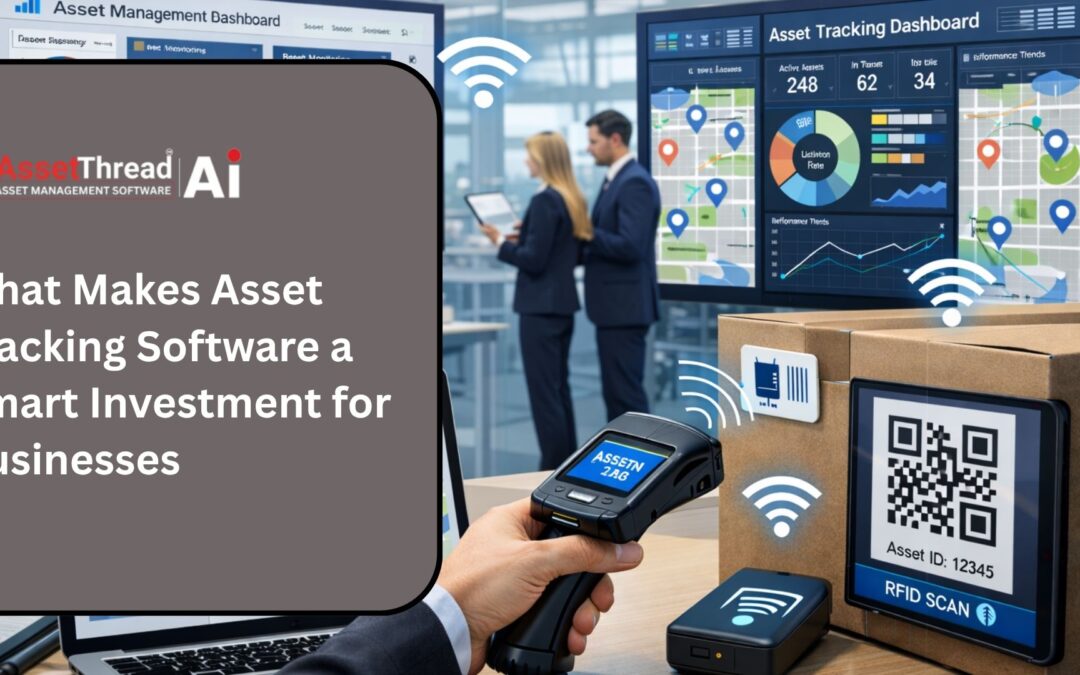
The asset tracking software enables this by integrating both tracking technologies and a centralized system to track and manage assets in a cost-effective manner. It makes sure that every information associated with assets is registered and can be accessed on a real-time basis.
How it works:
- Asset Tagging – Assets are barcoded, QR coded or RFID tagged.
- Data Collection – Asset information is collected by devices.
- Centralized System Data is stored in asset platforms.
- Monitoring – Dashboards will allow real-time tracking and insights.
How to Choose the Right Asset Tracking Software?
It is also important to select the appropriate solution to achieve long-term success and usability. The system is declared to be business friendly and easy to scale.
What to consider:
- Ease of use and user interface
- Real-time tracking capabilities
- Interoperability with other systems.
- Reporting and analytics.
Conclusion: Is Asset Tracking Software Worth the Investment ?
Asset tracking software will be an intelligent investment as it will make it easier to track assets, save on expenditure and increases efficiency in running the business. Companies that embrace systematic asset management will have enhanced control and make informed decisions.
In the modern competitive world, sustainable growth is impossible without proper management of assets.
Frequently Asked Questions
Q1. What is asset tracking software and how does it help businesses ?
A. Asset tracking software helps businesses monitor asset location, usage, and status in real time. It improves efficiency, reduces losses, and ensures better resource utilization across operations.
Q2. How does a fixed asset management system help with compliance ?
A. A fixed asset management system maintains accurate records and generates audit-ready reports, ensuring compliance with financial and regulatory standards.
Q3. What features should businesses look for in asset tracking software ?
A. Businesses should look for features like real-time tracking, automated alerts, reporting and analytics, mobile accessibility, and integration capabilities. These features ensure better control and scalability.